Our most recent publications, reports, events, and updates — all in one place
EU Awareness Centre videos turn knowledge into a defence against manipulation. In a short format, they explain how the European Union works, expose misleading claims, and show how to spot AI-generated content and foreign interference.
Watch on YouTube 1:17
Can Russian FIMI Be Stopped?
 2:58
Are Europe's Bomb Threats, Cyberattacks and Drone Scares Connected?
 1:07
Why Does the European Flag Always Have 12 Stars?
 3:00
The European Media Freedom Act: Who Protects the Newsroom? | EU Unpacked
 1:17
Will the US Midterms Change America's Policy Towards Europe?
 0:47
How Can One EU Country Block 26 Others? Unanimity vs QMV
 1:17
Who Runs Poland's Constitutional Tribunal?
 1:27
Same Russian Playbook, Different Results: Why?
Independent, evidence-based analysis that examines misleading claims, manipulated information, and AI-generated content. Each edition checks specific claims or content against reliable evidence and primary sources, explains what is misleading or false, and helps readers distinguish fact from manipulation.
Facts vs Manipulation → AI or Reality? →Research, analysis, and commentary
 Latest
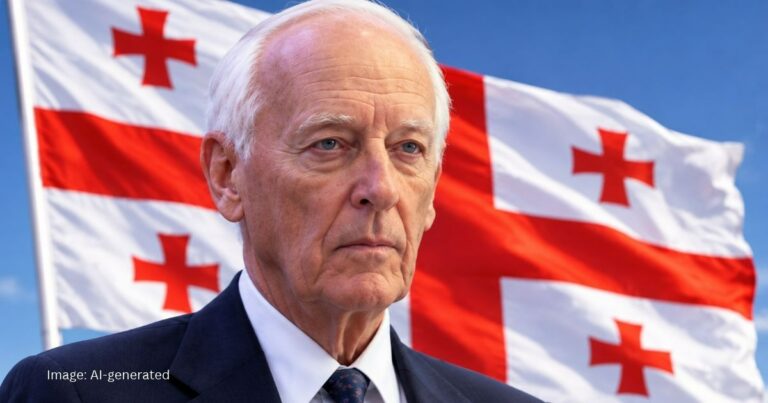
General Sir Garry Johnson had passed away. Georgia has lost a steadfast supporter, a demanding mentor, and a man who took our independence and our future seriously.


This commentary examines the scale and mechanisms of Russian online influence operations in the context of Ukraine’s strikes on Russian Yandex data centres and the subsequent claims of declining bot activity. It questions whether disruptions to digital infrastructure can significantly weaken foreign influence and explores…


Poland's latest central-bank appointments have resolved a management-board staffing dispute while creating vacancies on the Monetary Policy Council. With parliament preparing to consider proceedings against governor Adam Glapiński, the reshuffle highlights a legal question: who can make binding monetary-policy decisions if the governor cannot participate?…


Recent bomb threats disrupting European flights, cyberattacks targeting civilian infrastructure and reports of unidentified drones raise questions about the strategic significance of seemingly isolated incidents. This commentary examines how operational disruption can become an instrument of subversion, exploiting vulnerabilities in human security to undermine public…

The EU’s disinformation strategy has built strong detection and institutional-response capacity, but it has left citizens’ critical-thinking skills underdeveloped: citizens report awareness of disinformation without necessarily being equipped to recognise how it works. Drawing on Eurosceptic rhetoric in Italy, this brief argues that disinformation is…

Official positions and public statements by the EU Awareness Centre
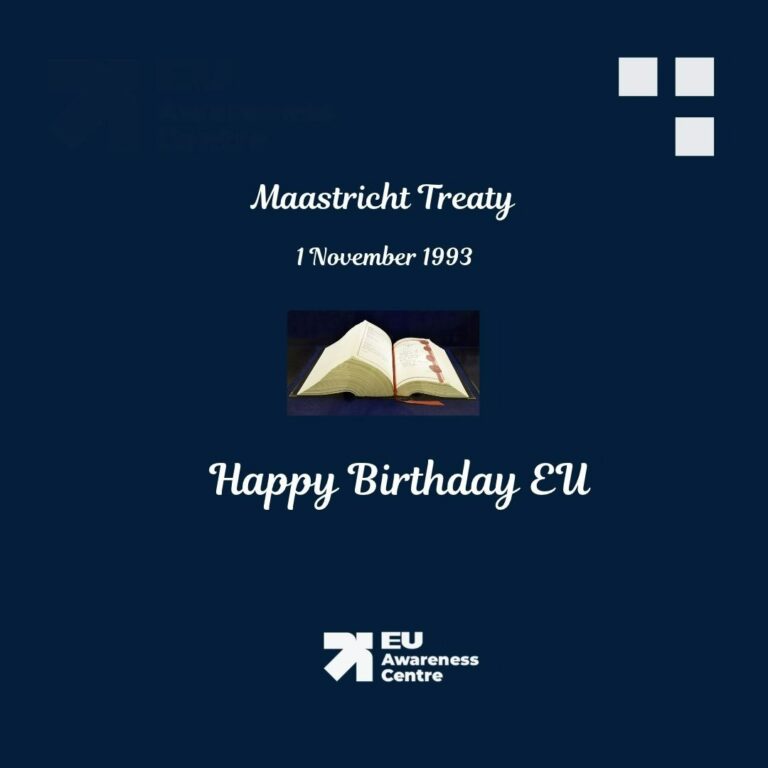
On 1 November 1993, the Maastricht Treaty entered into force, formally establishing the European Union and opening a new chapter in European integration. It was more…
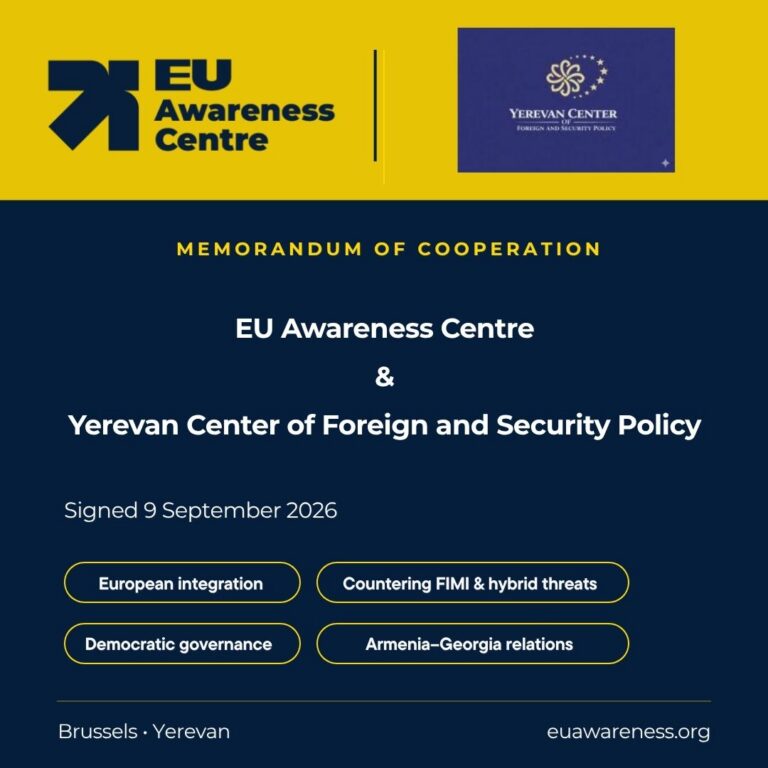
Brussels, Yerevan, 9 September 2026 The EU Awareness Centre (EUAC) is pleased to announce that it has signed a Memorandum of Cooperation with the Yerevan Center…
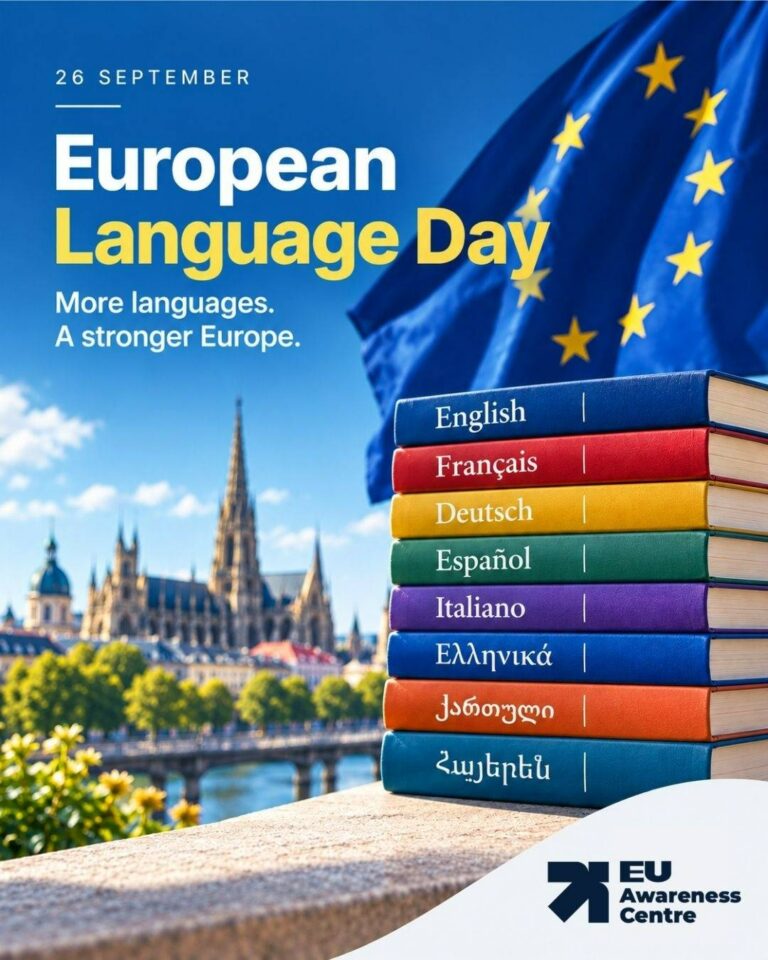
Europe’s linguistic diversity is more than a cultural asset. It is part of a resilient democratic society. Understanding different languages and perspectives helps us engage critically…
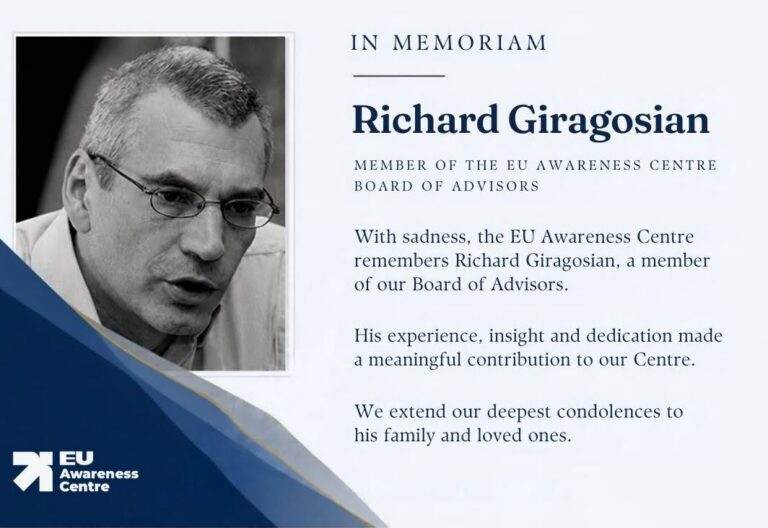
The EU Awareness Centre deeply mourns the passing of Richard Giragosian, a valued member of our Board of Advisors. We extend our heartfelt condolences to his…

The EU Awareness Centre warmly congratulates Ambassador Tedo Japaridze on his 80th birthday. We are honoured to have him as a Distinguished Fellow of the EU…
Public lectures, panels, and engagement activities